Procurement intake approval automation is the use of rule-based workflows and intelligent validation to capture, triage, route, and authorize purchasing requests without manual handoffs.
| Challenge | Manual Process | Automated Process |
|---|---|---|
| Request submission | Unstructured forms and email threads that frequently lack specifications, budget codes, or justification | Guided forms and conversational interfaces that prompt for required details and flag missing information before submission |
| Routing and approval | Manual forwarding through email or paper-based systems with ambiguous authority levels and idle queues | Auto-categorization and conditional routing based on spend thresholds, risk categories, and departmental hierarchies |
| Visibility and tracking | Opaque status buried in inboxes with no clear accountability or proactive monitoring | Real-time status tracking for requestors and procurement teams, with clear workload and bottleneck monitoring |
| Compliance and spend control | Policy enforced after the fact, allowing maverick spending and missed contract utilization | Embedded policy enforcement that guides users to pre-approved suppliers and spending limits at the point of request |
| Connection to P2P | Intake isolated from downstream procurement, finance, and invoicing workflows | Clean, authorized data flows directly into purchase order issuance and three-way invoice matching |
Why Intake Becomes a Bottleneck
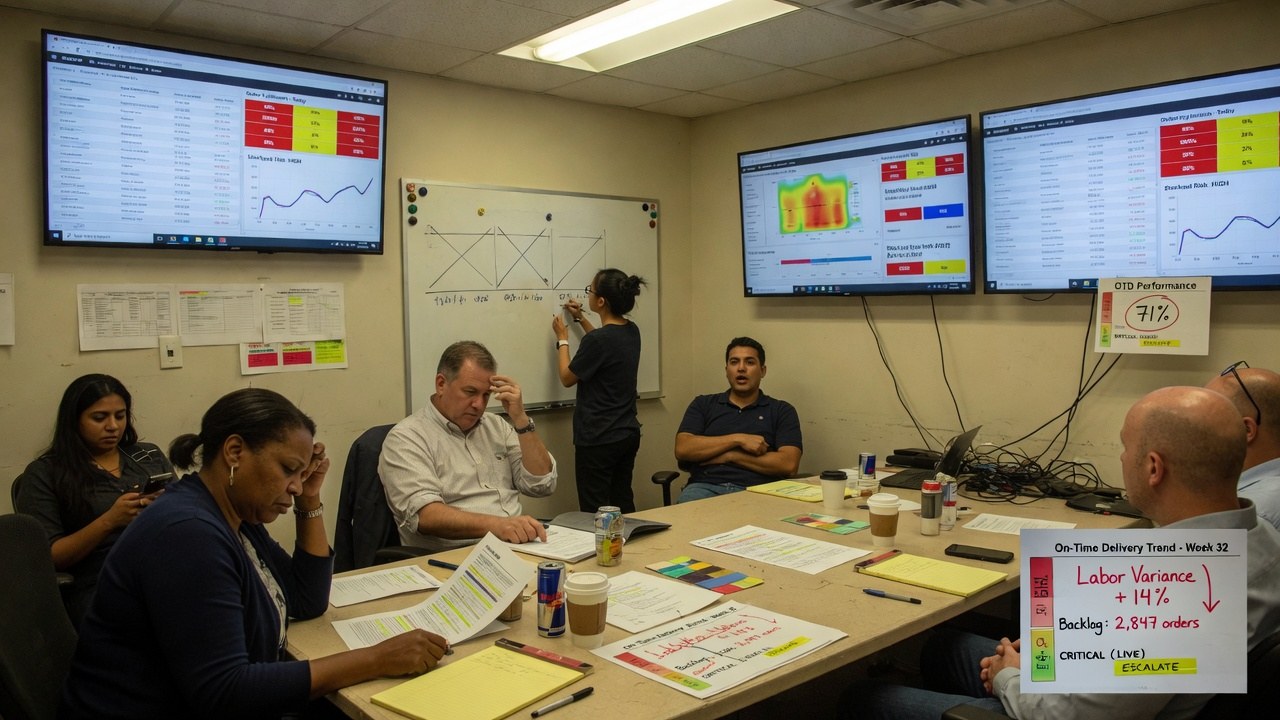
The core problem is a disconnect in perspective. Users see a simple transaction; procurement sees a multi-step process requiring documentation, verification, and authorization. In a manual environment, employees frequently submit requests that lack specifications, budget codes, or proper justification. Procurement teams then struggle to validate requirements, and approval workflows get bogged down by unnecessary back-and-forth between stakeholders. These inefficiencies do not simply cause delays. They lead to maverick spending outside negotiated contracts, missed cost-saving opportunities, and compliance risks that surface only during audits. Without a standardized entry point, every request becomes a custom project, and the intake queue turns into a traffic jam that slows the entire Procure-to-Pay lifecycle.
The Failure Points in Manual Procurement Approvals
Manual procurement approval workflows are slow, error-prone, and opaque. Research on procurement operations indicates that over 55 percent of organizations identify lengthy approval cycles as a key challenge. The specific failure points are consistent across enterprises:
- Routing delays and bottlenecks: Manually forwarding requests through email or paper-based systems slows the process, especially when multiple levels of review are required.
- High error rates: Incorrect data, missing signatures, and formatting mistakes are frequent in non-standardized submission channels.
- Lack of transparency: When a request disappears into an inbox, teams cannot see where it is stuck or who is responsible, leading to poor accountability and reactive follow-up.
- Maverick spending: Without enforced checkpoints at the point of request, unauthorized purchases slip through before procurement or finance can intervene.
- Disconnection from P2P: Intake happens in a vacuum, isolated from the structured workflow that should connect requisitioning to purchase order issuance and, eventually, to invoice matching and payment.
How Procurement Intake Approval Automation Restructures the Workflow
Automation does not merely digitize existing forms. It changes the behavior of the intake process through intelligent validation, conditional routing, and embedded policy enforcement. The specific mechanics include:
- Guided request submission. Instead of blank fields that invite incomplete data, intelligent intake platforms use conversational interfaces or structured forms to prompt employees for necessary details - department, budget code, supplier preference, business justification - and flag missing information before the request is formally submitted. This standardizes data quality at the entry point.
- Smart workflow automation. Once submitted, the system auto-categorizes the request and routes it to the correct approvers based on predefined business rules. Spend thresholds, risk categories, and departmental hierarchies determine whether a request goes to a department head, a finance controller, or a procurement manager. This removes the ambiguity of who signs off and prevents requests from sitting idle in the wrong queue.
- Supplier and contract recommendations. By analyzing historical procurement data, the system can suggest preferred suppliers and surface existing contract terms at the point of intake. This reduces sourcing complexity and ensures that negotiated rates are actually used rather than bypassed.
- Real-time tracking and visibility. Both requestors and procurement teams gain a clear view of status without relying on email threads. Procurement leaders can monitor request volumes, approval timelines, and spending patterns, enabling them to identify bottlenecks and allocate workload proactively.
- Embedded compliance. The automation layer guides users toward pre-approved suppliers and enforces spending limits and regulatory requirements before a purchase is authorized. Policy adherence is built into the workflow rather than policed after the fact.
Connecting Intake to the Broader P2P Lifecycle
The procurement approval workflow sits between requisitioning and purchasing, serving as a critical control point within the Procure-to-Pay lifecycle. Its structure is straightforward but exact:
Once final approval is granted, the purchase order is issued to the supplier. The workflow then extends into invoice validation, where the invoice is matched against the purchase order and the delivery receipt in a three-way match before payment release. Automating the intake and approval stages ensures that this downstream process begins with clean, authorized data, making matching and payment release faster and more accurate.
- Requestor: the employee who initiates the need.
- Approval levels: single or multi-tier, determined by risk or value.
- Approver(s): designated individuals with clear authority to authorize spend.
- Approval rules and thresholds: the conditions that trigger each review.
Operational Outcomes
Organizations that implement procurement intake approval automation typically see several measurable shifts. Procurement cycles accelerate because automated validation and routing prevent requests from stagnating in queues. Compliance improves because policy adherence is enforced at the point of entry, minimizing maverick spend. Decision-making becomes more precise because leaders gain real-time insights into where requests are delayed and how money is flowing. Finally, user experience improves; a simpler, predictable process increases adoption among employees and reduces the temptation to route purchases around formal channels.
Building the Workflow Without Over-Engineering
Implementing procurement intake approval automation does not require replacing existing ERP or finance systems. The most effective approach is to map your specific approval hierarchy, spend thresholds, and business rules into a logic layer that sits between your users and your back-end accounting tools.
CEDX Systems builds custom automations that connect intake interfaces to approval engines, supplier databases, and existing software stacks. Rather than forcing teams into rigid procurement suites with features they will never use, we design workflows around the exact friction points in your intake process - whether that means guided forms for field staff, multi-tier routing for capital expenditures, or automated triggers that initiate three-way matching for your finance team.
Conclusion
The next phase of procurement technology includes predictive purchasing, conversational AI, and voice-activated requests. But the foundational step for most organizations is fixing the intake bottleneck. By automating how requests are captured, validated, and approved, procurement teams gain more than speed; they gain control over spend, compliance, and data quality from the very first request.
Frequently Asked Questions
What is procurement intake approval automation?
Procurement intake approval automation is the use of rule-based workflows and intelligent validation to capture, triage, route, and authorize purchasing requests without relying on manual handoffs, email threads, or spreadsheets.
Why does manual procurement intake become a bottleneck?
Manual intake creates bottlenecks because employees often submit incomplete requests without proper specifications, budget codes, or justification. Procurement teams must then chase missing information, and approval workflows stall due to unclear authority levels and routing delays, turning the intake queue into a traffic jam that slows the entire Procure-to-Pay lifecycle.
How does procurement intake approval automation improve compliance?
Automation embeds compliance directly into the workflow by guiding users toward pre-approved suppliers, enforcing spending limits, and requiring necessary documentation before a request is submitted. This prevents unauthorized purchases from slipping through and ensures policy adherence is enforced at the point of entry rather than policed after the fact.
Can procurement intake approval automation integrate with existing ERP systems?
Yes. Effective implementation maps your existing approval hierarchy, spend thresholds, and business rules into a logic layer that sits between users and your back-end accounting tools, without requiring a full replacement of current ERP or finance systems.